Bacteriostatic Water for Peptide Reconstitution: What to Look For
October 20, 2026
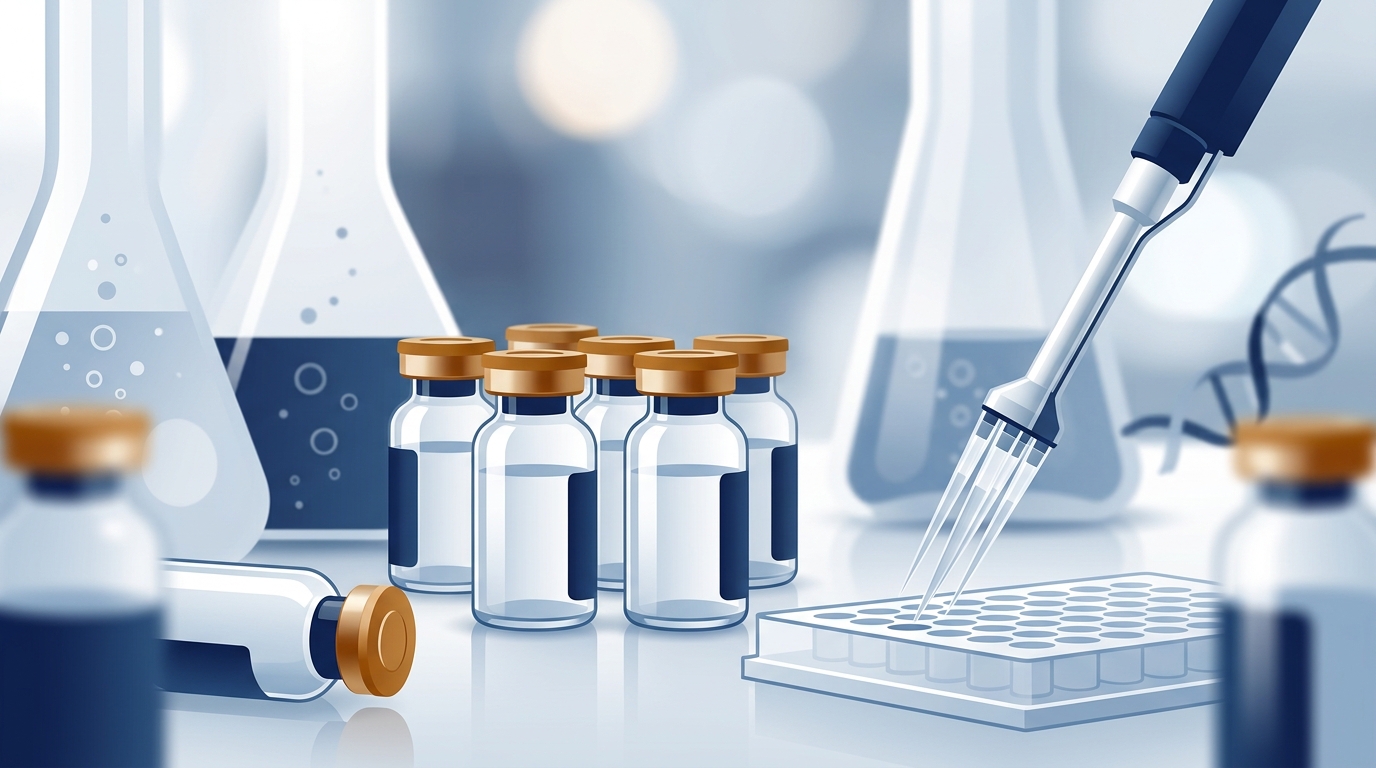
Bacteriostatic water is the most overlooked reagent in peptide handling. Researchers scrutinize peptide purity down to the percentage point, then reconstitute with whatever diluent is nearest to hand. That's a mistake. The diluent directly affects solution stability, contamination risk, and whether your reconstituted peptide stays usable for the duration of an experiment.
This guide covers what actually matters when sourcing bacteriostatic water for laboratory peptide work in Canada. Everything here is written for research use only — none of these products are intended for human consumption.
What Bacteriostatic Water Actually Is
Bacteriostatic water is sterile water containing a small amount of benzyl alcohol as a bacteriostatic preservative. The benzyl alcohol inhibits the growth of bacteria introduced during repeated access to a multi-use vial. That's the entire point: it buys a stability window across multiple withdrawals rather than forcing single-use discipline.
Contrast this with the alternatives researchers encounter:
- Sterile water for injection — no preservative. Intended for single use. Once punctured, contamination risk climbs.
- Normal saline (0.9% sodium chloride) — isotonic, but no bacteriostatic agent and the ionic content can interact with certain peptides.
- Acetic acid solutions — used for poorly soluble peptides, not a general-purpose diluent.
For most lyophilized research peptides handled across several sessions, bacteriostatic water is the standard reconstitution choice because the preservative extends the practical shelf life of the reconstituted solution.
Purity and Composition: What to Verify
Lead with the label. A legitimate bacteriostatic water product states its benzyl alcohol concentration explicitly — the industry-standard formulation is 0.9% benzyl alcohol in water for injection. If a product doesn't disclose the preservative concentration, treat that as a red flag.
Beyond the stated formulation, look for:
- Sterility assurance. The water should be sterile-filtered or terminally sterilized, with the method documented.
- Endotoxin testing. Bacterial endotoxins can confound cell-based and animal research even when sterility is confirmed. A supplier that performs Limulus Amebocyte Lysate (LAL) endotoxin testing gives you a cleaner starting point.
- USP-grade sourcing. Water meeting USP monograph standards for Water for Injection (WFI) is the baseline for low mineral and organic content.
- Container integrity. Vials should have intact stoppers and seals, with no particulate matter visible when held to light.
Why the Benzyl Alcohol Concentration Matters for Research
Benzyl alcohol is effective as a bacteriostat, but it is not inert. Some sensitive peptides can be affected by preservatives over time. For long-term stability studies, researchers sometimes compare reconstitution in bacteriostatic water versus preservative-free water to characterize how the benzyl alcohol interacts with a specific compound. Knowing the exact concentration is a prerequisite for that kind of controlled comparison.
Storage and Stability
Store unopened bacteriostatic water at controlled room temperature, away from light and freezing. Freezing can crack vials and compromise seals. The bacteriostatic property does not make the water indestructible — it slows microbial growth, it doesn't eliminate contamination risk indefinitely.
Once a vial is accessed, the clock starts. The benzyl alcohol extends the usable window across multiple punctures, but a multi-use vial still has a finite life. Label every vial with the date of first access. Many labs discard an opened vial after roughly a month of multi-use handling, though your SOP should set the exact limit based on your risk tolerance and access frequency.
Reconstituted peptide stability is a separate question from diluent stability. Most reconstituted peptides are stored refrigerated and used within a defined window, with some requiring protection from light and avoidance of repeated freeze-thaw cycles. The diluent choice influences how long that solution holds up.
How Diluent Choice Affects Your Peptide
The reconstitution solvent interacts with the peptide. Three practical points:
- Solubility. Not every peptide dissolves readily in bacteriostatic water. Hydrophobic or highly structured peptides may need an acidic or basic solvent to go fully into solution. Check the peptide's documentation before assuming water works.
- Concentration consistency. The volume of diluent you add sets the concentration of your working solution. Small volume errors produce large concentration errors across replicates. Researchers often use a Peptide Calculator to standardize concentrations across experiments and keep records reproducible.
- Preservative compatibility. As noted, benzyl alcohol is not universally neutral. For compounds where you're characterizing degradation, document the diluent as part of your method.
Many of the compounds Canadian labs reconstitute — GLP-1 receptor agonists like semaglutide, repair-research peptides like BPC-157, and growth-hormone secretagogues — arrive as lyophilized powder specifically so the researcher controls reconstitution. The diluent you pair them with is part of the experimental design, not an afterthought.
How to Evaluate a Bacteriostatic Water Supplier
Use the same rigor you'd apply to the peptides themselves. Before buying, confirm:
- The benzyl alcohol concentration is stated on the label, not just implied.
- Sterility and endotoxin testing are documented, ideally with batch-specific results available on request.
- The product is labeled for research use only and clearly not for human consumption.
- Storage and handling guidance is provided.
- The supplier is Canadian or ships within Canada reliably, which avoids customs delays that can expose temperature-sensitive products to uncontrolled conditions.
Peptide Depot stocks bacteriostatic water alongside its research peptide catalog for exactly this reason — pairing a documented diluent with documented peptides keeps your reconstitution variables under control. For broader sourcing questions, the FAQ covers handling and documentation in more detail.
Common Mistakes When Choosing a Reconstitution Diluent
These come up repeatedly:
- Treating all "water" as interchangeable. Sterile water, bacteriostatic water, and saline are not substitutes for each other. Each has a specific use case.
- Ignoring preservative compatibility. Reconstituting a sensitive peptide in bacteriostatic water without checking whether benzyl alcohol affects it can quietly skew stability data.
- Skipping the endotoxin question. Sterile does not mean endotoxin-free. For cell culture and animal work, endotoxin load matters.
- Not dating opened vials. A multi-use vial with no first-access date is a contamination liability with an unknown expiry.
- Over-diluting for convenience. Choosing a diluent volume to make withdrawal easier rather than to hit a target concentration introduces error. Calculate the volume deliberately.
- Storing near a freezer vent. Accidental freezing cracks seals and voids sterility. Keep vials in stable, controlled conditions.
Bacteriostatic water is a small line item, but it sits upstream of everything you measure. A diluent with a clearly stated preservative concentration, documented sterility and endotoxin testing, and proper storage gives your reconstituted peptides a defensible starting point. Get the diluent right and the rest of your QC chain holds together.
All products referenced are for research use only and not for human consumption.
Frequently Asked Questions
What is the difference between bacteriostatic water and sterile water?
Bacteriostatic water contains a bacteriostatic preservative — typically 0.9% benzyl alcohol — that inhibits bacterial growth across multiple withdrawals from a vial. Sterile water for injection contains no preservative and is intended for single use. For peptides reconstituted and accessed over several sessions, bacteriostatic water offers a longer practical window, while sterile water must be managed with strict single-use discipline.
How should bacteriostatic water be stored in a lab?
Store unopened vials at controlled room temperature, away from light and protected from freezing, which can crack vials and compromise seals. Once a vial is accessed, label it with the first-access date. The benzyl alcohol extends the usable life across multiple punctures, but an opened multi-use vial still has a finite shelf life defined by your lab's standard operating procedure.
Can bacteriostatic water be used to reconstitute all peptides?
No. Not every peptide dissolves readily in water, and some hydrophobic or highly structured peptides require acidic or basic solvents to fully dissolve. Benzyl alcohol is also not chemically neutral toward every compound. Always check the specific peptide's documentation before assuming bacteriostatic water is the appropriate diluent.
Why does endotoxin testing matter for reconstitution water?
Sterility confirms the absence of viable microorganisms, but it does not confirm the absence of bacterial endotoxins, which can confound cell-based and animal research. Water tested for endotoxins using a method such as the Limulus Amebocyte Lysate (LAL) assay gives you a cleaner starting point and reduces a hidden source of experimental variability.
Is bacteriostatic water safe for human use?
The bacteriostatic water and peptides supplied for laboratory work are for research use only and not for human consumption. These products are intended for controlled laboratory settings, not clinical or personal use.