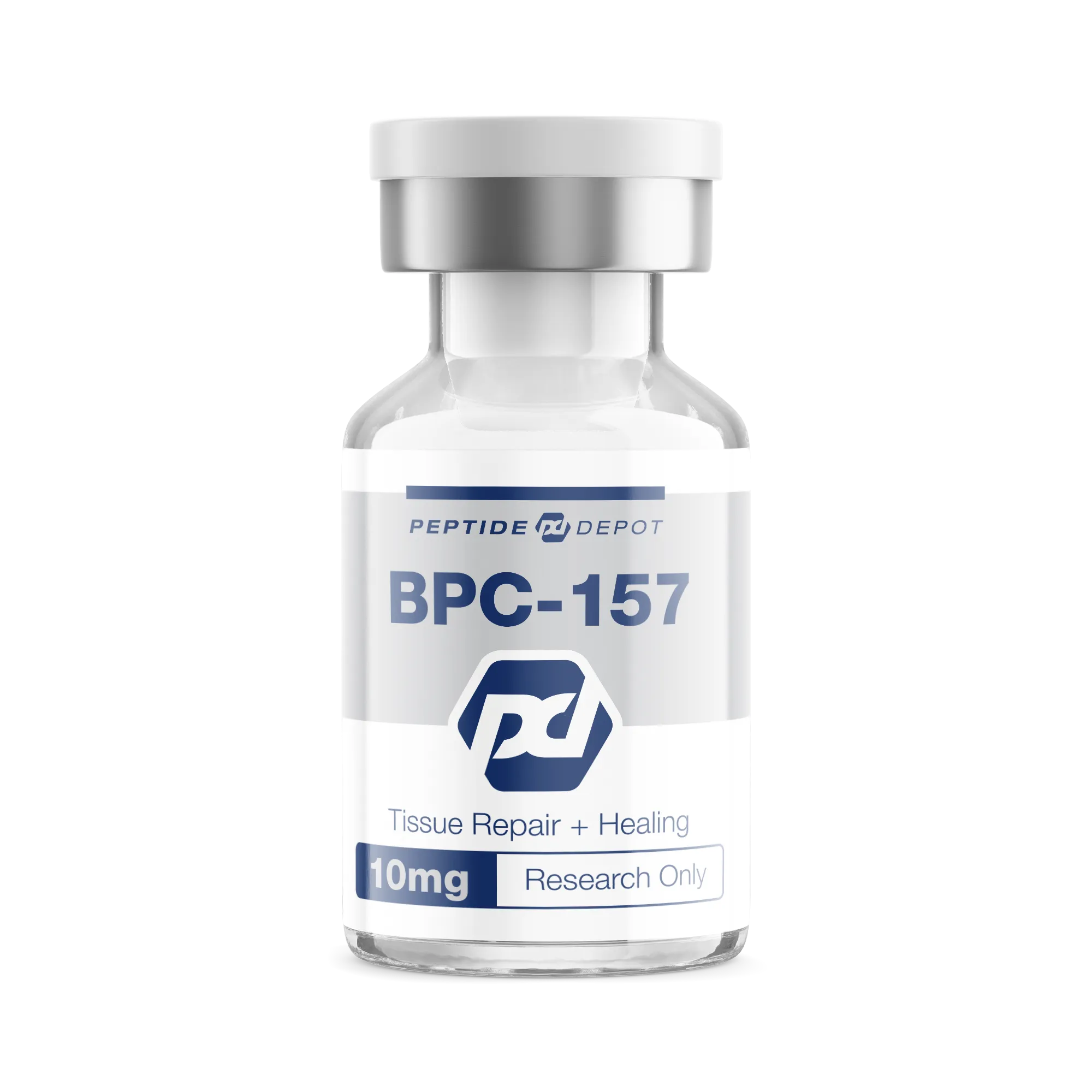
BPC-157
CAS 137525-51-0
Body Protection Compound-157 is a synthetic peptide derived from a protein found in gastric juice. Widely studied for its regenerative properties in connective tissue, muscle, and the nervous system. For research use only. Not for human consumption.
$64.99CAD
Select size:
Bundle of 10 — save 20% off
$64.99 $51.99 / unit
SKU: BPC157-10
Need help with dosing? Try our calculatorFor research use only. Not for human consumption.
Molecular Profile
| CAS Number | 137525-51-0 |
|---|---|
| Molecular Formula | C62H98N16O22 |
| Molecular Weight | 1419.5 g/mol |
Reference data for identification only. Look up CAS 137525-51-0 on PubChem.
Frequently Asked Questions
What is BPC-157?▼
BPC-157 is a synthetic peptide fragment derived from a protein found in gastric juice. In research settings it is studied for its role in tissue-repair and angiogenesis pathways. Peptide Depot supplies it strictly for laboratory research use — not for human consumption.
What purity is your BPC-157, and how is it verified?▼
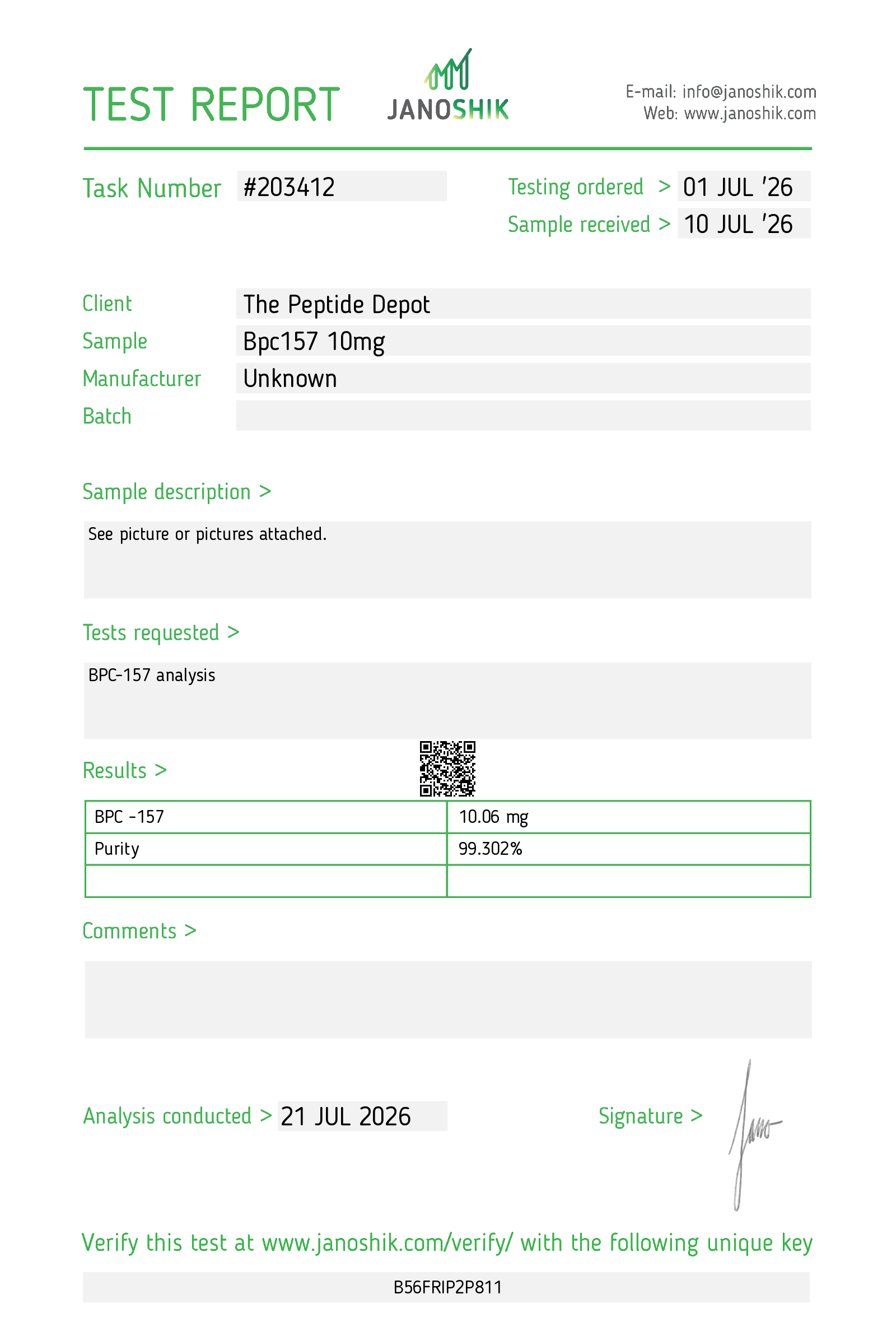
This compound is tested by third-party analysis — HPLC for purity and mass spectrometry for identity. The Certificate of Analysis is available on the product page (verifiable at janoshik.com) so researchers can independently confirm purity and identity.
How should BPC-157 be stored?▼
Lyophilized peptide is generally kept cold (refrigerated or frozen) and away from light and moisture for long-term stability; once reconstituted it is refrigerated and used within a shorter window. Storage handling should follow your lab's protocols.
Is BPC-157 legal to purchase in Canada?▼
Peptide Depot sells BPC-157 in Canada for laboratory and research use only. It is not approved for human or veterinary use and is not sold for consumption. Purchasers are responsible for complying with the regulations applicable to their research.
How does BPC-157 differ from TB-500?▼
Both are peptides studied in tissue-repair research, but they are structurally unrelated and act through different pathways — BPC-157 is a gastric-juice-derived fragment studied for angiogenesis and connective-tissue models, while TB-500 is a thymosin beta-4 fragment studied for actin regulation and cell migration. Our "BPC-157 vs TB-500" article covers the comparison in more depth.
For shipping, payment, and general questions, see our FAQ.